
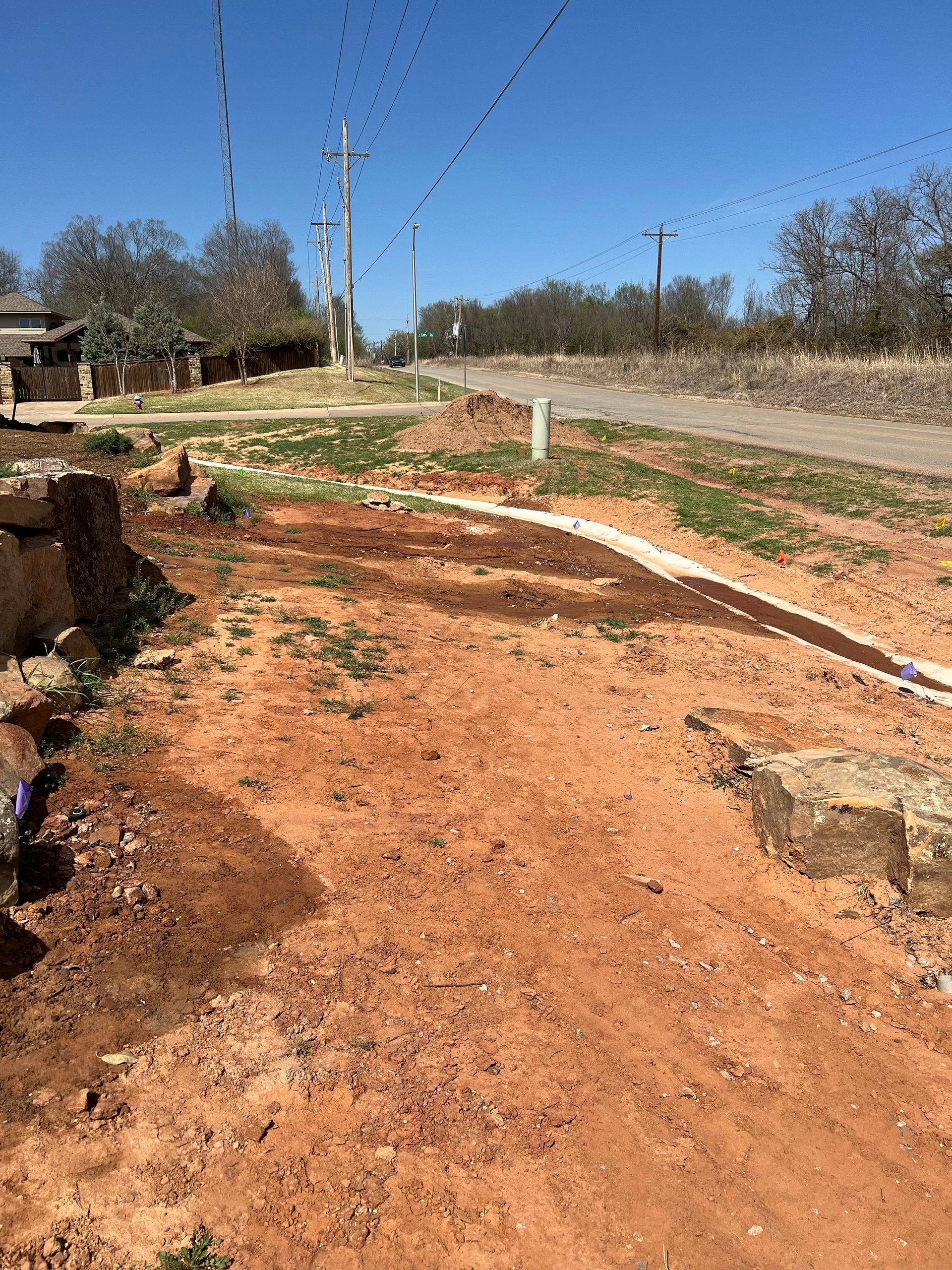
Clean Sites Ready for Construction Activity
Site Prep & Land Clearing in Yukon and surrounding areas for properties with vegetation, brush, or debris preventing access to building areas
Construction delays occur when sites aren't properly cleared before foundation crews or utility installers arrive, and incomplete clearing leaves roots and organic material that cause settling under driveways or building pads. Site preparation across Yukon, Mustang, El Reno, or a surrounding area involves removing vegetation, clearing brush and small trees, preparing larger trees for removal by specialized crews, hauling away debris, and rough grading to establish initial site contours. Teeter Land Solutions prepares residential and light commercial properties for construction by creating safe, build-ready sites while minimizing unnecessary land disturbance that damages areas outside the construction footprint.
The clearing process strips vegetation and organic topsoil from areas where structures, driveways, or utility lines will be installed, removes brush and debris that blocks equipment access, and establishes clear boundaries between work zones and protected areas. Equipment selection depends on density of vegetation, whether material gets chipped and spread or hauled off site, and how much existing landscape needs preservation for final site appearance.
Request site preparation services to confirm scope and schedule for clearing your property before construction begins.
What Proper Site Preparation Accomplishes
Complete site preparation creates defined work areas free of vegetation, stumps, roots, and surface debris that would interfere with excavation, grading, or construction equipment. Efficient operation involves clearing paths for equipment access first, then systematically working through areas designated for building pads, driveways, utility corridors, and drainage features. Thorough cleanup removes material that would decompose and create voids under finished surfaces.
After site preparation finishes, construction zones show bare soil or subgrade ready for excavation and grading, clear sight lines for surveying and layout work, and elimination of obstacles that previously prevented equipment access. Building crews arrive to sites where initial earthwork is complete and subsequent phases can proceed without delays for additional clearing.
Preparation work includes identifying and protecting existing utilities, marking trees or landscape features that remain in place, and establishing erosion control measures if significant time will pass before construction stabilizes exposed soil. Projects benefit from clear communication about which areas get cleared completely versus areas where selective clearing preserves specific vegetation or site features for final landscaping.
Questions Before Starting Your Project
Property owners preparing for new construction often ask about sequencing site preparation with other project phases and what clearing methods suit different site conditions.
What determines which vegetation gets removed during site clearing?
Clearing limits follow building plans, utility easements, and areas where equipment needs access, with vegetation outside those zones preserved unless drainage work or fire clearance requires additional removal.
How does clearing affect trees that will remain on the property?
Equipment stays outside drip lines of protected trees to avoid root damage and soil compaction, and clearing plans identify which trees sit too close to construction zones to survive the work even with protection measures.
What happens to cleared vegetation and debris?
Material gets hauled to disposal facilities, chipped and used for mulch if property owners request, or piled for removal by specialized debris hauling services depending on volume and project budget.
Why does topsoil get stripped during site preparation?
Organic topsoil compresses under structural loads and doesn't provide stable subgrade for buildings or paving, so preparation includes stripping and stockpiling topsoil for later reuse in landscaped areas while exposing mineral subsoil for construction.
When should land clearing occur relative to permit approval and surveying?
Clearing typically waits until permits are issued and surveyors stake property corners and clearing limits, preventing removal of vegetation outside approved work areas and ensuring compliance with local requirements.
Teeter Land Solutions provides thorough site cleanup using efficient equipment operation to prepare residential and light commercial properties for construction phases. Reach our Yukon office to schedule a site visit and discuss clearing requirements for your upcoming project.