
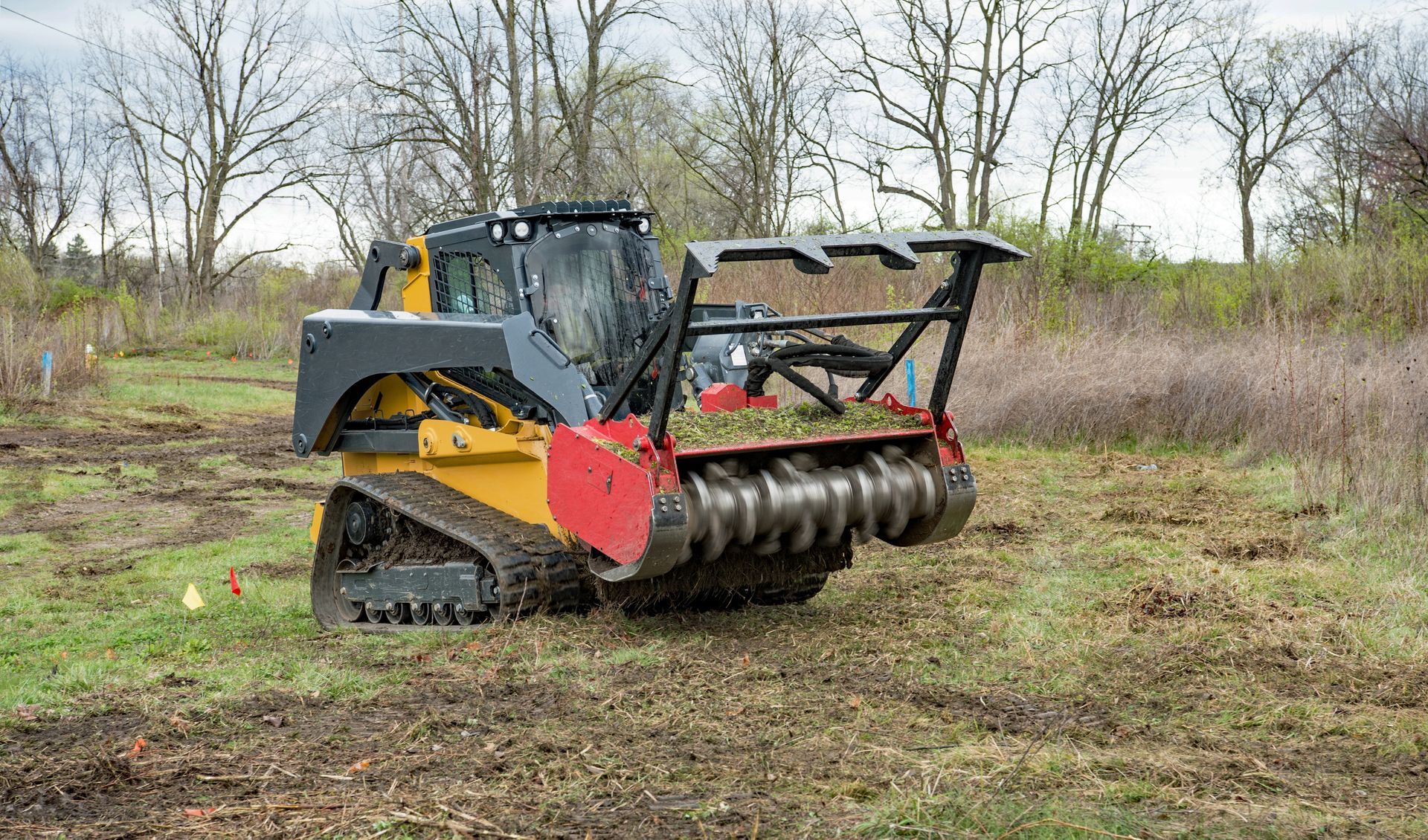
Cleared Land With Topsoil Intact
Forestry Mulching in Yukon and surrounding areas for brush and overgrown vegetation removal
Traditional land clearing removes vegetation but also scrapes away topsoil, requires hauling debris off-site, and leaves properties with bare dirt exposed to erosion until new growth establishes. Forestry mulching uses a rotating drum with cutting teeth that grinds brush, small trees, and undergrowth into mulch that remains on the ground as a protective layer, preserving topsoil structure and organic content while clearing overgrown areas for construction, recreation, agriculture, or improved access. Teeter Land Solutions operates forestry mulching equipment in Yukon, Mustang, Edmond, and neighboring communities for properties needing vegetation cleared without extensive ground disturbance or the delays associated with burning permits and debris removal logistics.
The mulching process involves cutting vegetation at ground level and simultaneously grinding it into small chips that spread across the cleared area, creating a layer that suppresses regrowth, reduces erosion, and decomposes over time to improve soil conditions. This method works efficiently on brush, saplings, small trees up to several inches in diameter, and dense undergrowth that makes properties difficult to access or develop.
Request forestry mulching services to clear overgrown areas while keeping topsoil and organic material in place.
Why Mulching Works for Property Clearing
Equipment moves through overgrown areas, cutting vegetation and reducing it to mulch in a single pass without scraping the ground or creating the ruts and soil compaction associated with tracked dozers. The resulting mulch layer is typically two to four inches thick, depending on vegetation density, and settles over time as material decomposes and integrates into the topsoil.
Teeter Land Solutions completes forestry mulching for properties preparing land for homes, outbuildings, pastures, trails, or improved access roads where preserving soil quality matters. After clearing, you observe defined boundaries between wooded and open areas, reduced fire risk from accumulated brush and dead vegetation, and cleared surfaces where equipment can operate or landscaping can begin without waiting for debris removal or dealing with stumps and root systems that obstruct grading.
Forestry mulching is particularly effective for clearing fence lines, establishing firebreaks, improving property visibility and access, or preparing recreational land without removing the topsoil base needed for future planting. The method doesn't eliminate large trees or handle root removal for construction pads, and it leaves mulch on the surface rather than bare dirt, which may require grading adjustments depending on the property's next use.
What Property Owners Usually Ask
Questions about forestry mulching typically involve understanding equipment capabilities, how cleared areas look after work is finished, and when mulching is the appropriate clearing method.
What size vegetation can forestry mulching equipment handle?
Mulching equipment efficiently clears brush, brambles, and trees typically up to six or eight inches in diameter, depending on wood density and machine specifications, while larger trees require conventional cutting and removal methods.
How does mulching prevent erosion compared to traditional clearing?
The mulch layer left on the ground protects topsoil from raindrop impact and wind, slows water movement across slopes, and retains moisture that encourages decomposition and stabilizes the surface until vegetation regrows or other ground cover is established.
What does the property look like immediately after mulching?
Cleared areas are covered with a uniform layer of wood chips ranging from small particles to pieces several inches long, creating a brown, textured surface that contrasts with surrounding uncleared vegetation and settles gradually as decomposition progresses.
When is forestry mulching preferred over dozer clearing?
Mulching is preferred when topsoil preservation matters, when debris hauling is impractical or costly, when working on slopes prone to erosion, or when environmental considerations limit ground disturbance and off-site waste removal.
How long before mulched areas are ready for construction or planting?
Light construction access can occur immediately after mulching if ground conditions are dry, while grading for building pads or planting typically waits for the mulch layer to settle and partially decompose, which may take several weeks to months depending on climate and mulch thickness.
Teeter Land Solutions provides forestry mulching for residential, agricultural, and recreational properties throughout Yukon and the OKC metro where efficient vegetation clearing without soil disturbance is required. Call (405) 482-2710 to discuss clearing needs and schedule an evaluation of your overgrown property areas.