
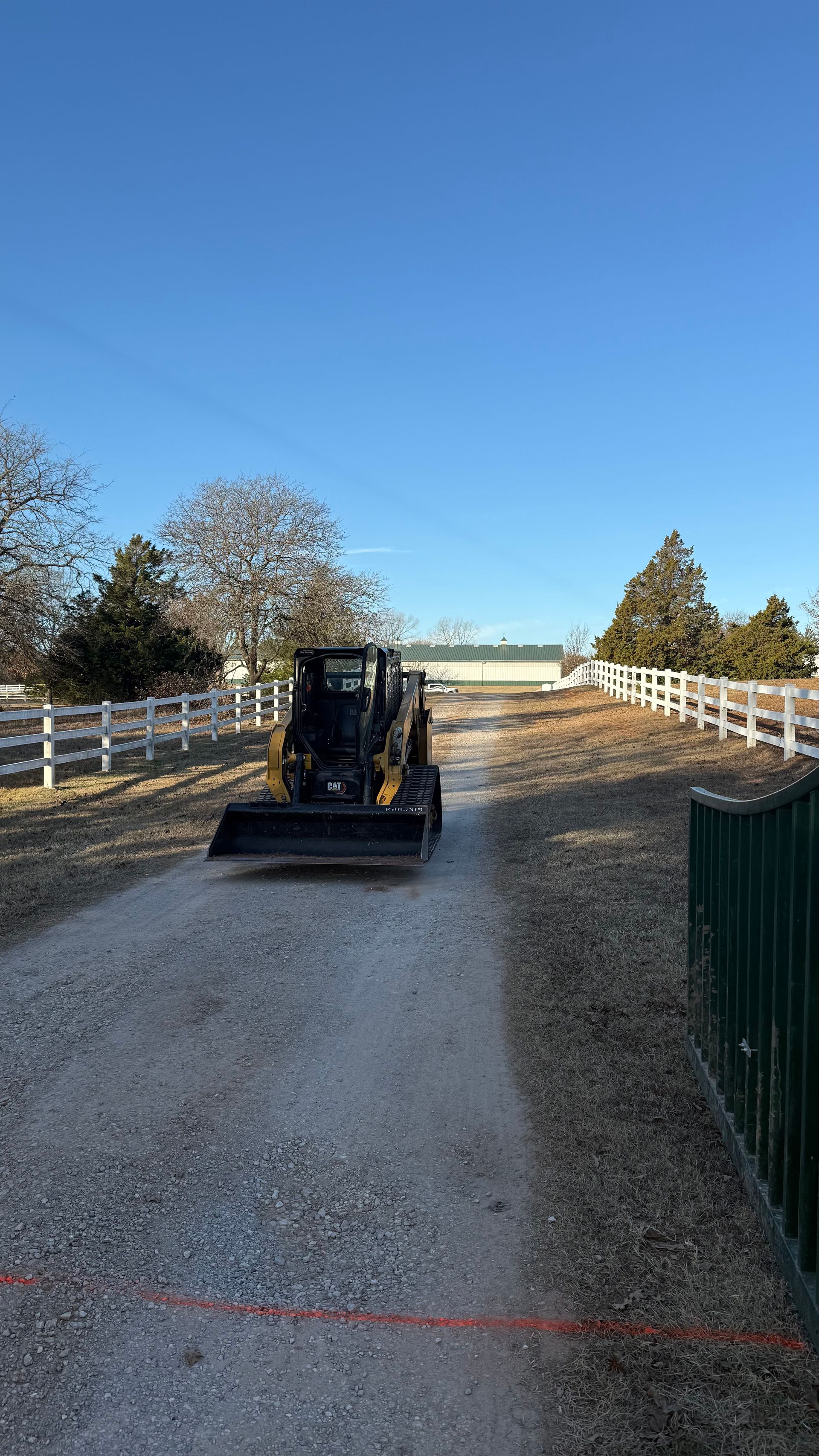
Drainage Slopes That Prevent Water Problems
Grading in Yukon and surrounding areas for properties with standing water, uneven terrain, or sites requiring elevation changes before construction
Properties across Yukon, Edmond, Mustang, and neighboring communities show water pooling near foundations, driveways that trap runoff, and uneven yards where mowing equipment struggles because original grading never established proper drainage flow. Teeter Land Solutions handles rough grading that shapes overall site elevations, finish grading that creates final surface contours, driveway grading that sets approach slopes and crowns for water shedding, and building pad grading that provides level areas at correct elevation relative to surrounding ground. Grading work accounts for how Oklahoma clay swells when wet and shrinks during dry periods, requiring compaction standards that prevent future settlement.
The process involves cutting high areas and filling low spots to establish designed slopes, compacting fill material to density specifications so surfaces remain stable under traffic and weather exposure, and verifying final elevations match plans using survey equipment. Grading plans show where water should flow during storms, how much slope is needed to move runoff without causing erosion, and what finished elevations allow proper drainage away from structures.
Schedule grading services to address drainage concerns and prepare your property for construction or landscaping work.
Why Proper Grading Works for Long-Term Performance
Grading creates consistent slopes that direct water toward street drainage, retention areas, or designed discharge points rather than allowing pooling near buildings or property lines. Rough grading moves large volumes of soil to establish general site shape, while finish grading smooths surfaces to final contour and removes ruts or irregularities that trap water. Equipment operators work to grade stakes or laser guidance systems that maintain target elevations throughout the site.
Once grading is complete, you'll notice water flowing off driveways and paved areas instead of ponding, building pads sitting higher than surrounding grade so runoff moves away from foundations, and elimination of low spots where standing water previously killed grass or created mud. Landscaping, concrete, and construction crews arrive to surfaces ready for their scope of work without additional elevation corrections.
Grading projects include managing topsoil separately from subgrade material when finish landscaping requires fertile soil layers, coordinating grade changes with existing utility locations that can't be covered or disturbed, and timing work to avoid periods when wet soil can't be properly compacted. Attention to elevation details during grading prevents erosion and water intrusion issues that develop over time.
What Property Owners Usually Ask
Grading questions often focus on how much slope is necessary, what soil conditions require before compaction succeeds, and how finished grades integrate with existing site features.
What slope is required for proper drainage away from buildings?
Grading typically creates minimum two percent slope for the first ten feet from foundations, which translates to approximately two and a half inches of drop per ten feet, sufficient to move water without causing erosion on the surface.
How does finish grading differ from rough grading?
Rough grading establishes overall site elevations and major drainage patterns using larger equipment, while finish grading smooths surfaces to final contour, removes equipment tracks and irregularities, and prepares for landscaping or paving using precision blade work.
What happens if existing grade is too low relative to street elevation?
Low sites require importing fill material to raise finished elevations, with fill placed in layers and compacted to prevent future settling, and grading designed to transition smoothly from new fill areas to existing ground without creating abrupt elevation changes.
Why does grading require compaction testing on some projects?
Commercial projects and sites with engineered fill specifications require density testing to verify compaction meets structural requirements, confirming that surfaces won't settle under building loads or paving.
When should grading occur during the construction sequence?
Rough grading happens early to establish site access and general elevations, while finish grading occurs after major construction activity to avoid rework from equipment traffic, but before landscaping or final paving begins.
Teeter Land Solutions uses precision equipment and attention to elevation requirements to deliver grading that reduces erosion and helps prevent standing water issues on residential and light commercial properties. Call our office at (405) 482-2710 to arrange a property assessment and grading estimate.