
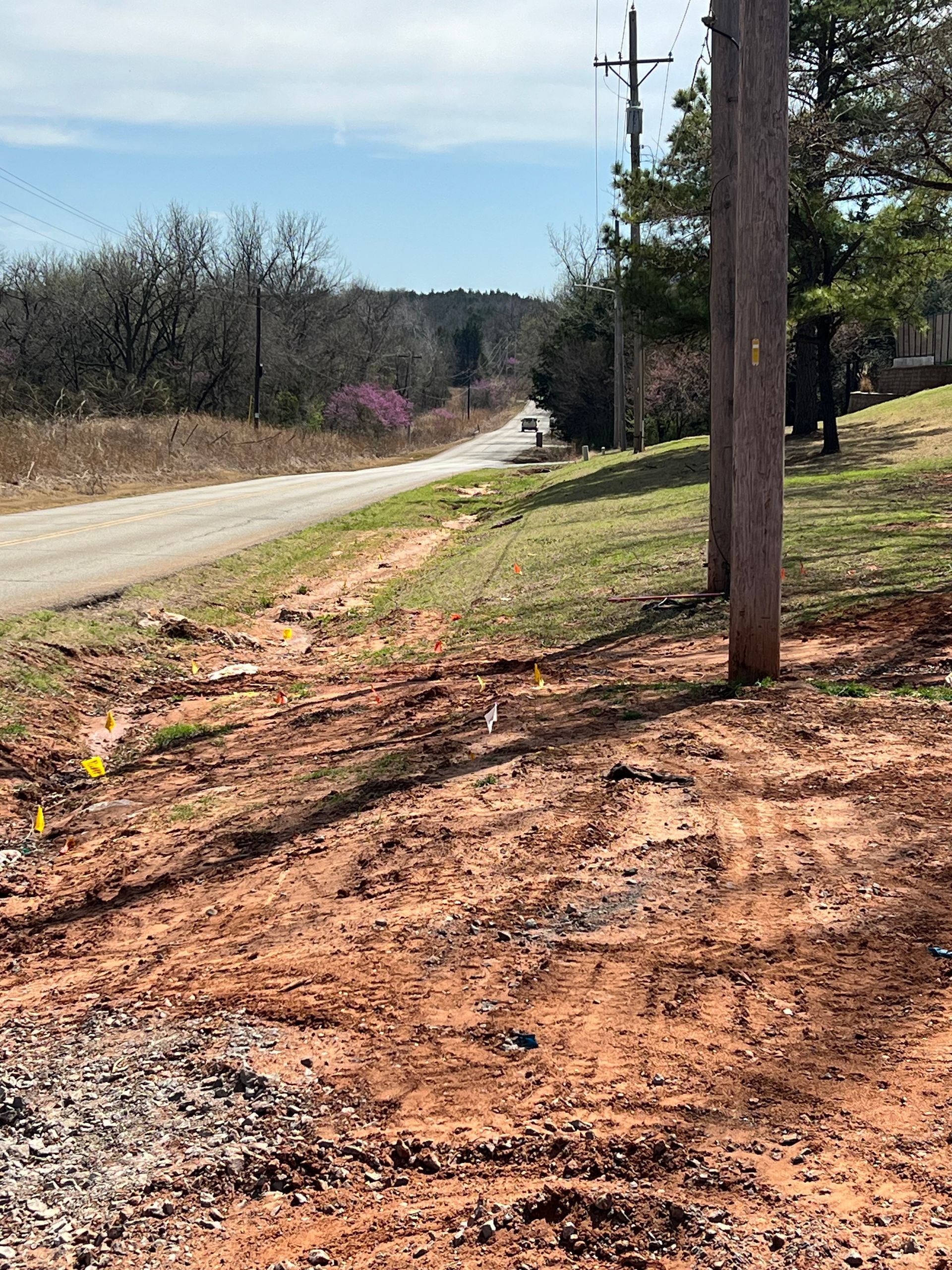
Soil That Supports What You Build
Earthwork & Dirt Work in Yukon and surrounding areas for residential and light commercial grading projects
Properties that settle unevenly, driveways that crack within two years, or retaining walls that lean outward often trace back to soil that was moved quickly rather than placed and compacted correctly. Teeter Land Solutions provides earthwork and dirt work in Yukon, Mustang, Piedmont, and neighboring communities for projects requiring fill dirt placement, rough grading, backfilling, soil redistribution, and pad construction where long-term structural performance depends on proper compaction and moisture control during placement. You notice the difference when driveways remain level, building pads don't develop low spots, and backfilled areas around foundations don't settle away from the structure after seasonal rain cycles.
Earthwork involves moving soil from one area of a property to another or importing fill dirt to raise grades, create level surfaces, or backfill around completed foundation walls. Proper placement includes spreading material in controlled lifts, compacting each layer before adding the next, and managing moisture content so clay soils reach density specifications without becoming too wet to support loads or too dry to achieve bonding between lifts.
Arrange an on-site visit to discuss soil movement and grading needs for your upcoming project.
How Earthwork Addresses Settlement and Stability
The process begins by evaluating existing soil conditions, identifying areas requiring excavation or fill, and determining compaction standards based on what the finished surface will support, whether vehicle traffic, building loads, or landscaping features. Equipment operators place fill dirt in layers typically six to eight inches thick, compacting each lift with vibratory rollers or plate compactors before adding the next layer to eliminate voids and prevent future settling.
After earthwork is complete, graded surfaces hold their shape during rain events, pads remain level without developing depressions where water collects, and backfilled zones around foundations stay tight against walls rather than pulling away and creating gaps that channel water toward the structure. Driveways and parking areas constructed over properly compacted fill dirt resist cracking and rutting even under repeated vehicle loads.
Projects may involve rough grading for new construction sites, redistributing existing soil to improve drainage patterns, importing select fill material when native soils aren't suitable for structural support, or fine-grading surfaces before hardscaping installation. The approach varies based on soil type, moisture conditions at the time of work, and the loads the finished surface must carry.
Answers to Frequent Earthwork Questions
Property owners often want to understand compaction processes, fill material selection, and how soil type affects project timelines and methods.
What determines whether existing soil can be reused or needs replacement?
Soil with high organic content, excessive clay that won't drain, or contamination from previous use typically requires removal and replacement with engineered fill, while stable native soils can often be redistributed and compacted in place if moisture content is controlled.
How does compaction prevent future settling?
Compacting soil in thin lifts removes air pockets and increases particle density, reducing the space available for later compression under load or moisture changes and creating a stable base that resists movement after construction is finished.
Why does moisture content matter during earthwork?
Clay soils common in Yukon become either too slick to compact properly when saturated or too rigid to achieve density when overly dry, requiring timing and moisture management so material reaches optimal compaction during placement.
What's included in rough grading for a construction site?
Rough grading establishes major elevations and drainage slopes across the property, creates building pads and access routes, and prepares surfaces for utility installation without yet achieving the fine tolerances needed for paving or final landscaping.
How long before compacted fill is ready for the next construction phase?
Properly compacted fill can typically support equipment and subsequent construction immediately after placement, though final surface work may wait for settling observation periods if project specifications or local conditions require verification before proceeding.
Teeter Land Solutions handles soil placement, grading, and compaction for residential and light commercial projects throughout Yukon. Call (405) 482-2710 to review your earthwork requirements and project timeline.