Water That Moves Away From Structures
Drainage Solutions in Yukon and surrounding areas for properties with standing water and erosion problems
Drainage problems develop when lot grading directs water toward foundations instead of away, when flat areas lack outlet paths for runoff, or when concentrated flow from roofs and paving creates erosion channels that undermine structures and landscaping. Teeter Land Solutions designs drainage solutions in Yukon, Oklahoma City, El Reno, and neighboring communities after evaluating how water moves across your property during storms, identifying where it collects, and determining whether the issue requires grading corrections, swale construction, culvert installation, or a combination of methods to redirect runoff toward appropriate discharge points. Properties with improved drainage stop experiencing foundation moisture, eroded slopes, or saturated yard areas that remain unusable for days after rain events.
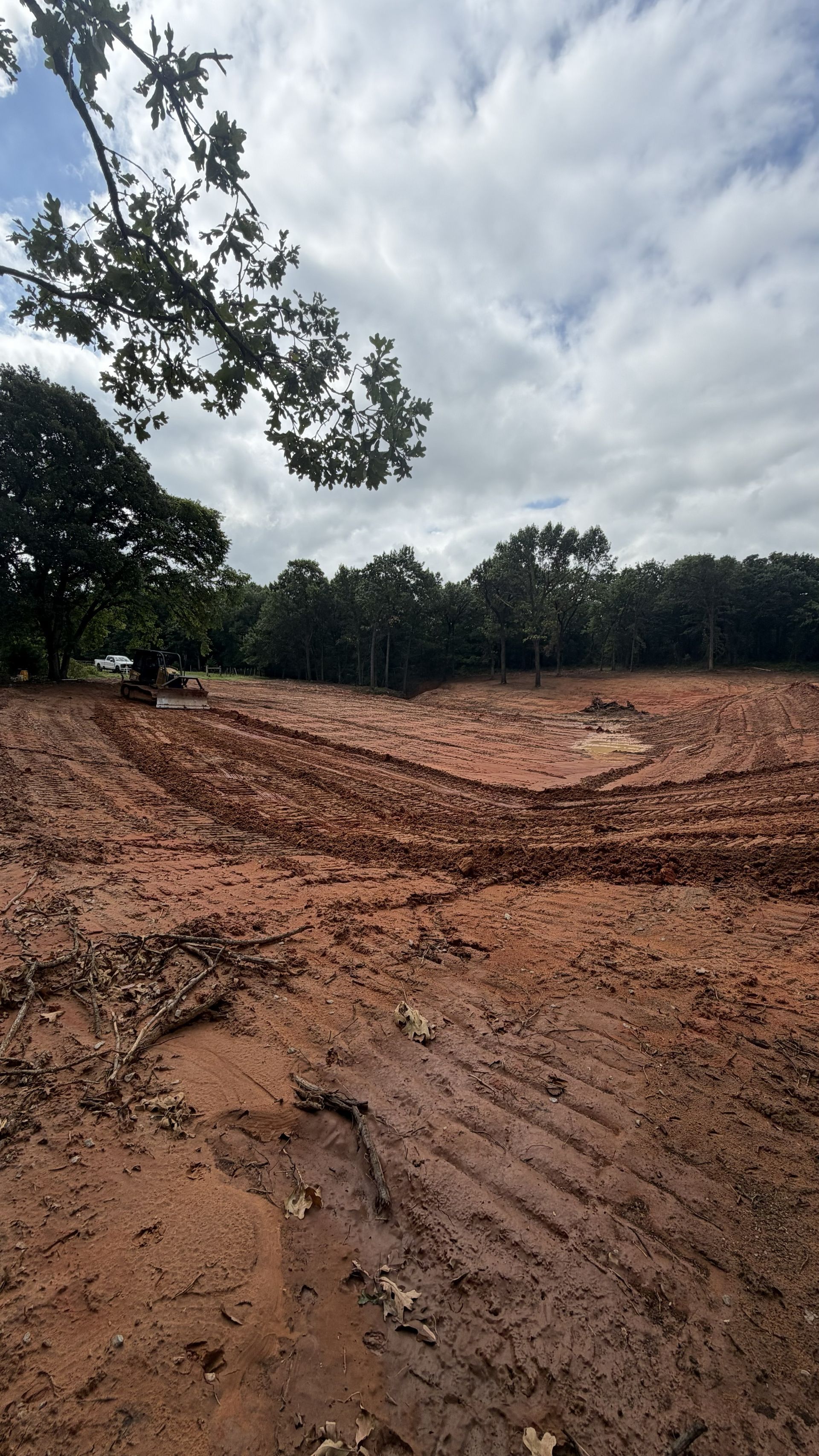
Drainage work involves reshaping ground surfaces to create positive flow away from buildings, constructing swales that channel water along designed paths, installing culverts under driveways or access routes where water must cross, and managing runoff volume so concentrated flow doesn't create new erosion problems downstream. Each property presents different challenges based on existing slope, soil permeability, surrounding grades, and the volume of water generated during typical storms.
Schedule a drainage evaluation to identify where water collects and determine correction methods for your property.
What Changes After Drainage Improvements
The evaluation process identifies low spots where water ponds, areas where flow moves toward rather than away from structures, locations where concentrated runoff causes erosion, and existing drainage features such as swales or culverts that no longer function due to settling or debris accumulation. Solutions are developed based on those observations, property boundaries that constrain discharge options, and the need to manage water without simply pushing problems onto neighboring properties.
Once drainage corrections are in place, you observe water moving along swales toward street drainage or designated low areas during storms rather than pooling against foundations or creating mud zones in the yard. Erosion channels stop expanding, previously saturated areas dry faster after rain, and foundation perimeters remain drier because grading slopes direct runoff away from the structure before it can infiltrate adjacent soils.
Drainage solutions may include regrading sections of the yard to establish positive slope, excavating shallow swales with vegetated bottoms that slow and absorb runoff, installing culverts where driveways block natural drainage paths, or adding berms that redirect sheet flow before it concentrates into erosive channels. The solution depends on the severity of existing problems, available space for drainage features, and discharge options at property boundaries.
Common Questions About Drainage Work
Homeowners dealing with wet yards and foundation concerns typically ask about grading methods, how swales function, and what changes they'll observe after improvements are completed.
What causes standing water in yards that previously drained?
Settling around foundations or in fill areas, compacted soil from vehicle traffic or construction equipment, landscape changes that block flow paths, or accumulated sediment in existing swales can all disrupt drainage patterns and create ponding where it didn't occur originally.
How do drainage swales move water without creating erosion?
Swales are shallow, gently sloped channels with vegetated bottoms that slow water velocity and allow some infiltration while guiding runoff toward discharge points, unlike steep ditches that concentrate flow and scour soil during storms.
When should culverts be installed instead of rerouting drainage?
Culverts become necessary where driveways, roads, or other hard surfaces cross natural drainage paths and would otherwise create dams that pond water upstream, allowing flow to continue beneath the paved surface without interruption.
How does Oklahoma clay soil affect drainage solutions?
Clay soils around Yukon drain slowly because of low permeability, causing runoff to remain on the surface longer and requiring grading solutions that provide clear flow paths to property edges rather than relying on infiltration to manage water volume.
What maintenance do drainage features require after installation?
Swales need periodic debris removal and vegetation management to maintain flow capacity, culverts require inlet and outlet clearing to prevent blockages, and graded areas should be monitored for settling that might reverse drainage slopes over time.
Teeter Land Solutions evaluates property-specific drainage conditions and develops solutions that reduce standing water and erosion throughout Yukon. Contact our team at (405) 482-2710 to discuss grading and runoff management for your residential or light commercial property.